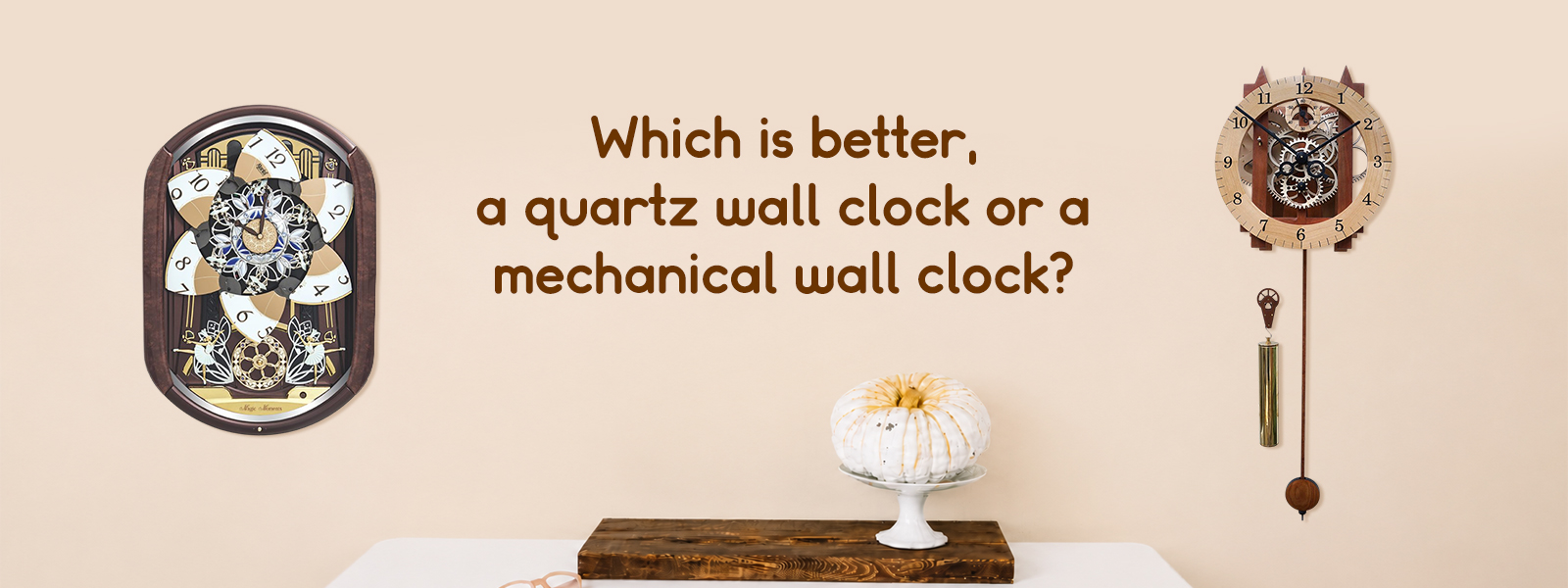
The wall clock serves as an ideal purchase for most houses. Besides being useful in letting you know the time, a wall clock can make the room look better and match the décor of the house. However, when looking to buy clocks for wall, there are two major kinds that one can find: quartz and mechanical clocks. While these may have the same use, they are quite distinct in terms of function, maintenance, precision, and general appeal.
When it comes to buying wall clocks from a well-known brand such as Ajanta, there are various options available. However, knowing the difference between a quartz and a mechanical clock will assist you greatly when making a selection.
Quartz Wall Clocks
Quartz wall clocks work by using a quartz movement, which is powered by batteries to keep the time. The quartz crystal keeps oscillating at a particular frequency, controlling the movement of the hands of the clock. These wall clocks are easy to maintain and only need to be replaced occasionally. They come in different shapes and sizes to suit different rooms such as the bedroom, kitchen, office, living room, and others.
Mechanical Wall Clocks
Mechanical wall clocks work by using gears, springs, among other parts that do not depend on batteries. Some types of mechanical wall clocks need to be wound and maintained. Mechanical clocks are known for their craftsmanship, pendulum, and traditional look.
Which is Better – Quartz or Mechanical Wall Clocks?
Both quartz and mechanical clocks for walls have their own advantages. The right choice depends on whether you prioritise accuracy, convenience, maintenance, or traditional craftsmanship.
| Feature | Quartz Wall Clock | Mechanical Wall Clock |
| Accuracy | Gives very precise and dependable timekeeping with little variance. | May require occasional tweaking because its accuracy is dependent on temperature, position, and the internal components. |
| Power Source | Functions with the help of a battery, making it easy to operate. | Utilizes mechanical energy that might require winding from time to time based on the specific mechanism. |
| Maintenance | It is low maintenance and needs just a battery change from time to time. | Is demanding and might require winding, cleaning, maintenance, and servicing from time to time. |
| Ease of Use | Convenient and ideal for people who are looking for an effortless timekeeping device. | Is appropriate for individuals who like the feel of handling traditional watches. |
| Design Options | Offers various designs from modern and minimalist to traditional and ornamental. | Comes in classic, vintage, or traditional designs with beautiful detailing. |
| Interior Appeal | Fits well in modern and minimalist interior decoration as well as traditional settings. | Can complement traditional, vintage, or heritage-inspired interior decors. |
| Best For | Can be used in homes, offices, bedrooms, kitchens and many more places. | Suitable for living rooms, dining halls, and other areas where craftsmanship and aesthetics matter. |
| Overall Choice | Perfect for people who value accuracy, convenience, low maintenance and versatility. | May require occasional tweaking because its accuracy is dependent on temperature, position, and the internal components. |
Which One Should You Choose?
If you are looking for the best wall clocks with no complications to handle and minimal maintenance needs, a quartz clock would be ideal. Mechanical clocks, on the other hand, would suit people who love the art and beauty of a handmade timepiece despite the complications that come with maintaining it. In essence, what works for one person may not work for another depending on his or her preferences.
How to Choose the Best Wall Clock?
Selecting the appropriate wall clock requires much more than finding something that looks good to the eye. Keep these factors in mind when choosing the right wall clock.
Consider Its Purpose
To begin with, define whether you want to use this clock as a functional device or a decorative one. In case it is all about functionality, select a design featuring clear and readable dials. As far as decorative purposes are concerned, you can opt for statement pieces.
Match It to the Room
It is essential to take into account the room in which it will be installed. So, the kitchen or the office will require simple and highly readable clock faces, while the living room can be equipped with decorative statement clocks. The bedrooms can do with less noisy devices.
Check the Size and Visibility
Pay attention to the wall size and the distance from which you will be reading this device. Sometimes a smaller clock is not visible on a huge wall, and an overly large design will look out of place in a cozy room. Make sure the numbers and hands can be seen from some distance.
Look at Features and Quality
Before buying the clock, make sure to verify its working, power needs, construction, materials used, and warranty offered. While purchasing through online shops, ensure to examine the size and features of the product. This will enable one to pick the most suitable clock in terms of function
Conclusion
There are benefits of both types of clocks – be it a quartz or a mechanical one. Quartz clocks can be recommended for those who need precise timing, easy maintenance, and convenient functioning. Mechanical clocks are for those who appreciate traditional make, complicated mechanisms, and the beauty of clocks.
One needs to select a clock after considering personal preferences and conditions of functioning. One can explore the Ajanta collection in case one wants to buy a wall clock. Choosing the best wall clocks that combine all the qualities mentioned above would allow having a useful and beautiful clock.
Quartz clocks work for those looking for modern designs and easy-to-use devices. On the contrary, mechanical clocks suit admirers of traditional craftsmanship and design.
Yes. Quartz wall clocks normally work on batteries. The battery will need to be changed regularly.
Yes, mechanical clocks tend to demand maintenance. Depending on the mechanism, it will have to be wound, cleaned, and/or lubricated occasionally.
A quartz clock would be a wise choice for a modern house due to the availability of many modern designs and easy maintenance. Mechanical clocks are ideal where one desires a traditional look.
Consider aspects of a clock such as size, design, legibility, mechanism, accuracy, maintenance demands, source of power, interior décor of the room, and budget.